Quick answer: A dryer that runs but won’t heat is most often caused by a clogged lint or vent system, a blown thermal fuse, or a failed heating element (electric dryers) or igniter and gas valve coils (gas dryers). Electric dryers can also lose heat from a tripped breaker leg that still lets the drum spin. A clogged vent is the most common — and most dangerous — cause, so always check it first.
It’s one of the most frustrating laundry-day problems: the dryer hums along, the drum spins, the timer counts down — and your clothes come out damp and cold. The good news is that “runs but no heat” narrows the problem down quickly. Here’s what’s most likely going on, what you can safely check yourself, and when to bring in a professional.
Gas vs. Electric: Why It Matters for a No-Heat Dryer
Before troubleshooting, know which type you have, because the heat sources are completely different:
- Electric dryers create heat with a heating element and run on a 240-volt circuit (two breaker legs). If one leg trips, the drum still spins but there’s no heat.
- Gas dryers create heat by igniting gas with an igniter and gas valve coils. They run on standard 120-volt power, so the drum spins fine even when the burner won’t light.
This single distinction explains most no-heat calls we get in Arlington.
The 6 Most Common Reasons a Dryer Won’t Heat
1. A Clogged Lint Vent (The #1 Cause — and a Fire Hazard)
When the lint screen and vent duct clog, hot, moist air can’t escape. The dryer overheats, trips a safety device, and stops producing heat — or runs forever without drying. A blocked vent is also the leading cause of dryer fires, so this is the first thing to check.
2. A Blown Thermal Fuse
The thermal fuse is a safety device that permanently cuts power to the heat source if the dryer overheats (usually because of a clogged vent). Once it blows, it must be replaced — and the underlying airflow problem must be fixed, or the new fuse will blow again.
3. A Failed Heating Element (Electric Dryers)
The heating element coils burn out over time. When the element fails, the dryer runs normally but produces no heat at all. This is one of the most common electric-dryer repairs.
4. A Faulty Igniter or Gas Valve Coils (Gas Dryers)
On gas dryers, a worn igniter won’t get hot enough to light the gas, or failed valve coils won’t release gas to the burner. Either way, the drum turns but the burner never fires.
5. A Tripped Breaker Leg or Partial Power Loss (Electric)
Because electric dryers use two 120-volt legs, one can trip while the other keeps the motor running. The fix can be as simple as fully resetting the breaker — turn it all the way off, then back on.
6. A Broken Thermostat or Temperature Sensor
Cycling thermostats and high-limit thermostats regulate dryer temperature. If one fails open, the heat source never turns on.
What You Can Safely Check Yourself
These checks are safe for any homeowner:
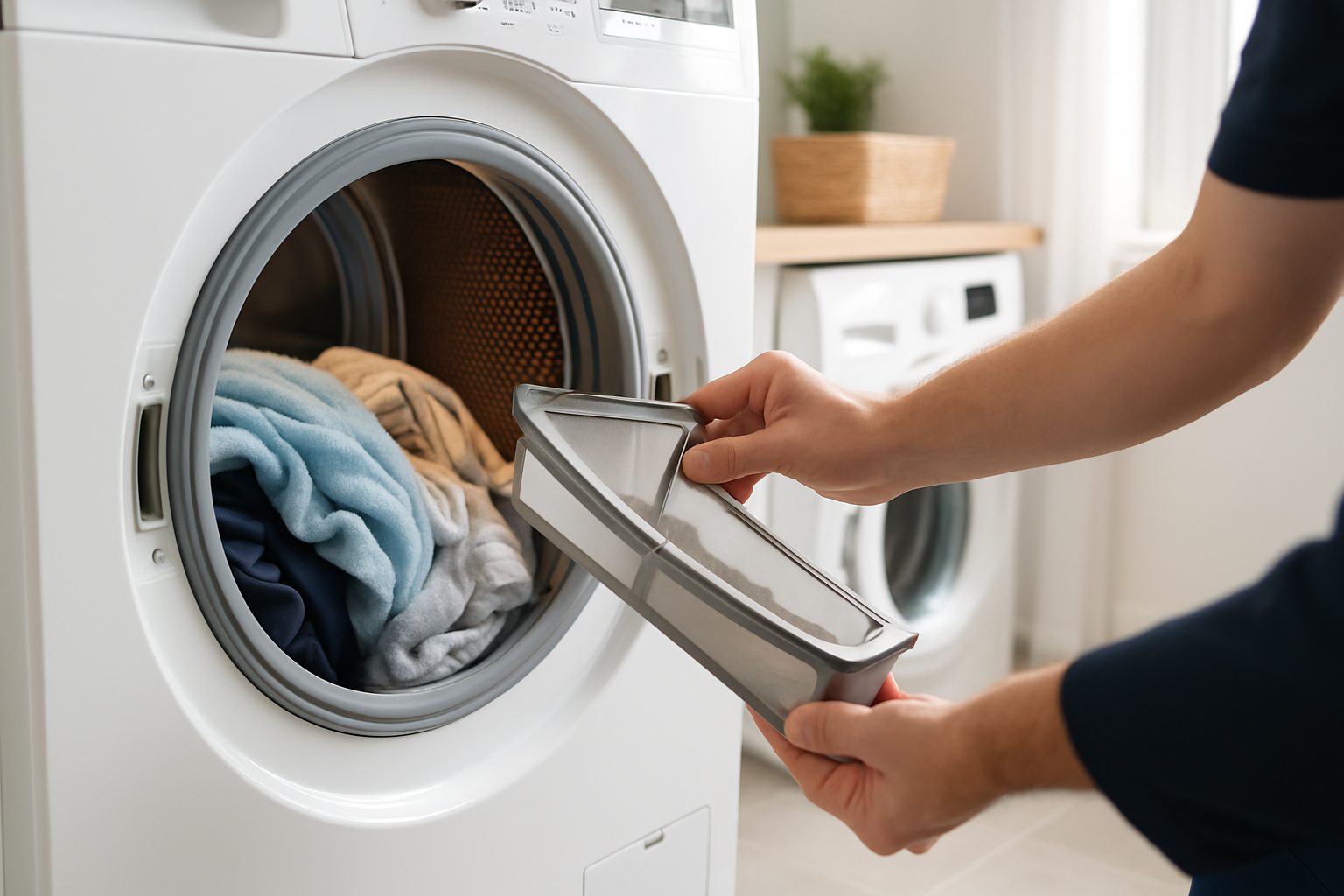
- Clean the lint screen — every single load. A film of fabric softener residue can also block airflow, so scrub the screen with soap and water occasionally.
- Check the vent. Disconnect the vent duct from the back of the dryer and clear out lint. Go outside and make sure the vent flap opens and isn’t blocked by a bird’s nest or debris.
- Feel the airflow outside. With the dryer running, you should feel strong warm air at the exterior vent. Weak airflow means a clog.
- Reset the breaker (electric dryers). Turn the dryer’s breaker fully off, wait, then back on. A partially tripped 240V breaker is a common, easy fix.
- Check the heat setting. Make sure an “Air Fluff” or “Air Dry” (no-heat) setting wasn’t selected by accident.
Safety note: Anything beyond these checks — testing the heating element, thermal fuse, igniter, or gas valve — involves disassembling the dryer and working with high-voltage electricity or gas. For your safety, leave those repairs to a qualified technician.
When to Call a Professional
Call an appliance repair pro if:
- The vent is clear and the breaker is reset, but there’s still no heat
- You have a gas dryer that spins but won’t fire (igniter or gas valve work)
- A thermal fuse keeps blowing
- You suspect a failed heating element or thermostat
- You smell gas or burning — in that case, stop the dryer, ventilate, and call right away
Our team handles all of these every day as part of our washer and dryer repair services in Arlington, TX.
Dryer Repair Cost in Arlington, TX
For most Arlington homeowners, common no-heat repairs — a thermal fuse, heating element, igniter, or thermostat — are affordable parts-and-labor jobs and almost always cheaper than buying a new dryer, especially if your unit is under about 8 years old. At Greg’s Grade A Appliance Repair, every dryer repair is backed by our 90-day parts-and-labor guarantee, so you’re covered after we leave. Not sure if it’s worth fixing? Our appliance maintenance guide can help you weigh repair vs. replace.
How to Keep Your Dryer Heating Properly (Maintenance)
- Clean the lint screen before every load — it’s the easiest, most important habit.
- Clean the full vent duct at least once a year (more often for large households).
- Don’t overload the drum — clothes need room to tumble and airflow to dry.
- Use rigid or semi-rigid metal venting instead of flexible foil, which traps lint.
- Watch for warning signs: clothes taking longer to dry, a hot laundry room, or a burning smell all signal airflow problems.
Frequently Asked Questions
Why is my dryer running but not getting hot?
The drum motor and the heat source are separate systems. If the motor works but there’s no heat, the problem is in the heating circuit — most often a clogged vent, a blown thermal fuse, a failed heating element (electric), or a bad igniter or gas valve (gas).
Can a clogged vent really stop a dryer from heating?
Yes. A blocked vent causes the dryer to overheat and trip its thermal fuse or thermostat, which cuts the heat. Clearing the vent — and replacing the blown fuse if needed — restores heat and reduces fire risk.
Is it worth repairing a dryer that won’t heat?
Usually, yes. If your dryer is under roughly 8 years old and the repair costs less than about half the price of a comparable new unit, repair is the smart choice and far less expensive than replacing it.
How much does it cost to replace a dryer heating element?
It’s a moderate parts-and-labor repair that’s almost always cheaper than a new dryer. We provide an exact quote before any work begins.
Why does my dryer heat then stop heating mid-cycle?
That’s a classic airflow and overheating symptom — usually a partially clogged vent or a failing cycling thermostat causing the dryer to shut off the heat to protect itself.
Need Dryer Repair in Arlington, TX?
If your dryer is still running cold after checking the vent and breaker, Greg’s Grade A Appliance Repair can get it heating again — safely and fast. We service all major brands, including Samsung, LG, GE, Whirlpool, Maytag, and Bosch, and we back every repair with a 90-day guarantee on parts and labor.
Book your dryer repair today or call (682) 554-6555 for same-day appliance repair in Arlington and across the DFW metro.
Written by the technicians at Greg’s Grade A Appliance Repair — Arlington, TX appliance repair specialists.