Quick answer: A dishwasher usually won’t drain because of a clogged filter, a clogged or kinked drain hose, a blocked air gap, a garbage-disposal connection that’s still plugged, food debris jamming the drain pump, or a failed drain pump or control board. In most homes, cleaning the filter and clearing the garbage-disposal connection fixes the problem in under 30 minutes. If the pump is dead or the control board has failed, you’ll need a technician.
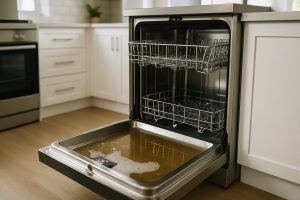
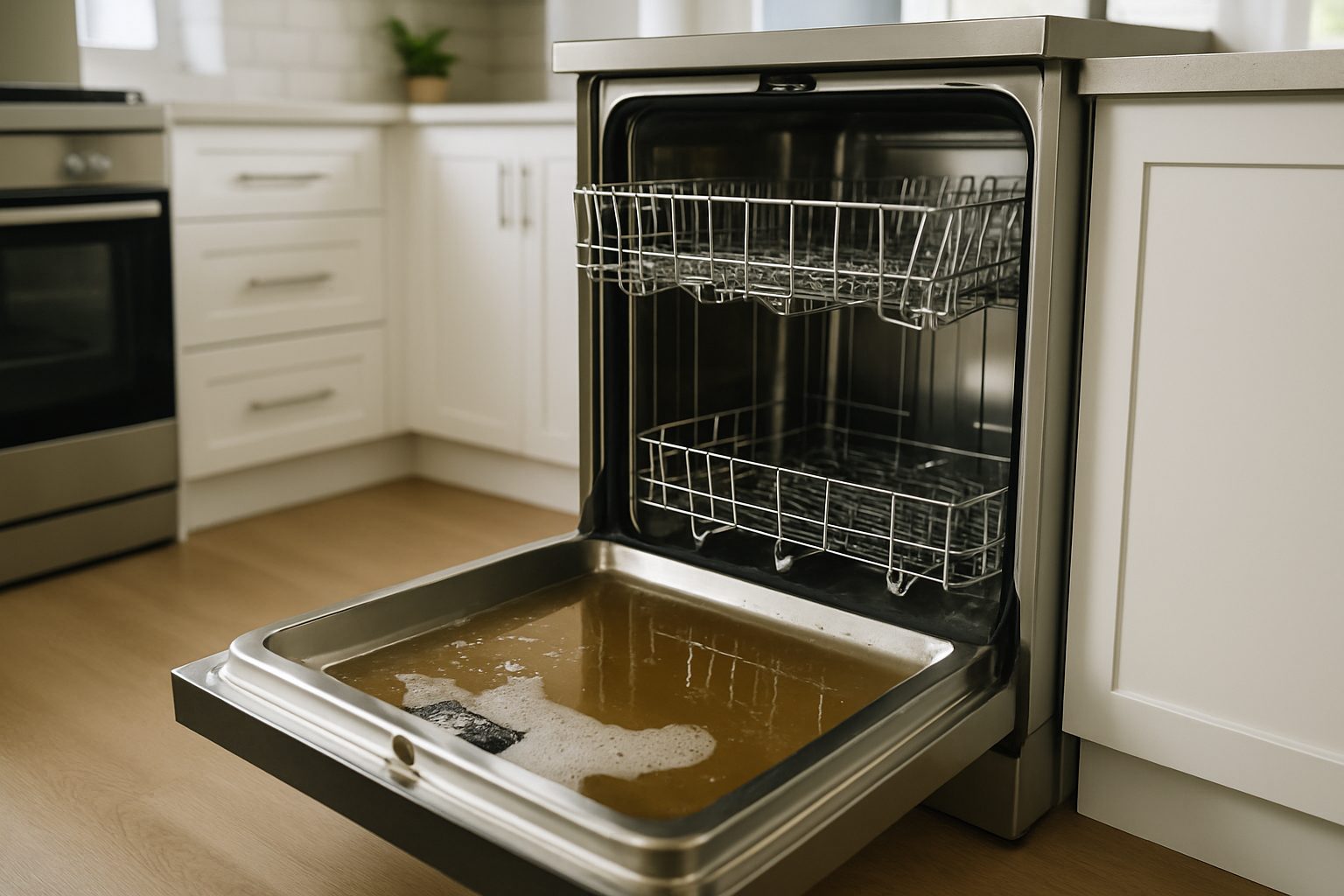
If you just opened your dishwasher to a pool of dirty water sitting at the bottom, take a breath — standing water is one of the most common appliance issues we see in Arlington homes, and it’s usually fixable. Below, we walk through every likely cause in the order a professional technician would check them, the steps you can safely try yourself, and how to know when it’s time to call in a pro.
First, Is It Actually Broken? A Little Water Is Normal
A small amount of clean water in the bottom filter area is normal — it keeps the seals from drying out. You have a real drainage problem if you see:
- A pool of dirty, standing water covering the bottom of the tub after a cycle
- Water that won’t drain at all when you cancel the cycle
- A cycle that stops mid-run with water left behind
- A gurgling sound or a drain error code on the display
The 7 Most Common Reasons a Dishwasher Won’t Drain
1. A Clogged Dishwasher Filter
The filter at the bottom of the tub catches food particles so they don’t recirculate. Over months of use it cakes with grease, labels, seeds, and bits of food — and water can’t get past it to the pump. This is the single most common cause.
2. A Clogged or Kinked Drain Hose
The drain hose carries water from the dishwasher to your sink drain or disposal. It can clog with grease or get kinked behind the unit, especially if the dishwasher was recently pulled out and pushed back.
3. The Garbage Disposal Knockout Plug (New Installs)
If your dishwasher was recently installed and has never drained, the culprit is almost always the knockout plug inside the garbage disposal inlet. It has to be removed during installation — and it’s frequently missed.
4. A Clogged Air Gap
That small cylinder on your sink or countertop is the air gap. When it clogs, water backs up. You’ll often see water spitting out of it during a cycle.
5. Food Debris in the Drain Pump
Glass shards, fruit pits, or a chunk of food can jam the drain pump impeller so it can’t push water out.
6. A Failed Drain Pump
Drain pumps have a small motor that eventually wears out. If you hear a humming-but-not-draining sound, or no pump sound at all, the pump may need replacing.
7. A Faulty Control Board or Timer
Less common, but if the control board isn’t sending the “drain” signal, the pump never runs. This requires diagnosis by a technician.
How to Fix a Dishwasher That Won’t Drain (Step by Step)
Try these in order. Stop as soon as the water drains — you’ve found your problem.
- Cut the power. Turn the dishwasher off at the breaker or unplug it before reaching inside. Safety first.
- Scoop out the standing water. Use a cup and towels to bail out as much as you can so you can work.
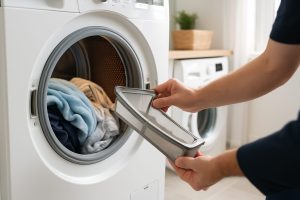
- Clean the filter. Twist out the cylindrical filter at the bottom, rinse it under hot water, and scrub it with a soft brush. Clear any debris from the filter housing.
- Check the garbage disposal. Run the disposal for a few seconds — a backed-up disposal will stop the dishwasher from draining. If it was just installed, confirm the knockout plug was removed.
- Clear the air gap. Pop the cap off, remove the cover, and clear out any gunk.
- Inspect the drain hose. Make sure it isn’t kinked behind the unit. If you’re comfortable, disconnect it and check for clogs.
- Run a rinse cycle. Restore power and start a short cycle to confirm the water drains.
Tip: Pouring a cup of baking soda followed by hot water (not vinegar alone) down the basket area can help loosen grease, but it won’t clear a solid clog or a mechanical failure.
When to Call a Professional
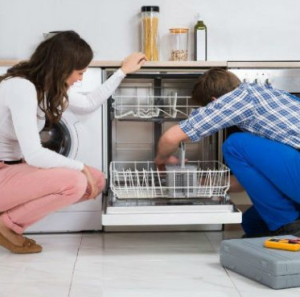
Call an appliance repair technician if:
- You’ve cleaned the filter, disposal, and air gap and water still won’t drain
- You hear the pump humming but no water moves (likely a jammed or failed pump)
- There’s no pump sound at all during the drain cycle
- You see a drain error code that returns after a reset
- Water is leaking onto the floor along with the drainage issue
These point to a drain pump, check valve, or control board problem — best handled through professional dishwasher repair in Arlington, TX to avoid leaks and electrical risk.
How Much Does Dishwasher Drain Repair Cost in Arlington, TX?
For most Arlington homeowners, a professional dishwasher drain repair runs in the range of a typical service-call-plus-parts visit. A simple clog clear is on the low end; a drain pump replacement costs more because of the part and labor to access it. The good news: dishwasher repairs are almost always far cheaper than replacing the whole unit — and at Greg’s Grade A Appliance Repair, every repair is backed by our 90-day parts-and-labor guarantee. For a clear breakdown of repair-vs-replace math, see our guide to the most common dishwasher issues we see in Arlington kitchens.
Preventing Future Drainage Problems
- Scrape plates before loading — you don’t need to pre-rinse, but remove big chunks.
- Clean the filter monthly (or every two weeks if you run it daily).
- Run a hot cleaning cycle with a dishwasher cleaner once a month to cut grease.
- Run hot water at the sink for a few seconds before starting a cycle.
- Don’t overload — water needs room to circulate and drain.
Frequently Asked Questions
Why is there standing water at the bottom of my dishwasher?
Standing dirty water means the dishwasher didn’t complete its drain cycle — usually because of a clogged filter, a backed-up garbage disposal, a clogged air gap, or a failed drain pump.
Can I run my dishwasher if it’s not draining?
You can, but you shouldn’t. Running it on top of standing water won’t clean your dishes and can overflow or damage the pump. Diagnose the drainage problem first.
Will vinegar unclog a dishwasher that won’t drain?
Vinegar helps with odor and light grease, but it will not clear a solid clog or fix a mechanical pump failure. Clean the filter and check the disposal first.
How much does it cost to fix a dishwasher that won’t drain?
A simple clog clear is inexpensive; a drain pump replacement costs more due to parts and labor. In nearly every case it’s cheaper than buying a new dishwasher.
Is a dishwasher not draining an emergency?
Not usually — but if it’s leaking water onto the floor, cut the power and water supply and call a technician promptly to prevent cabinet and floor damage.
Need Dishwasher Repair in Arlington, TX?
If your dishwasher still won’t drain after the steps above, our team at Greg’s Grade A Appliance Repair can diagnose and fix it fast. We’ve been Arlington’s trusted appliance repair team for years, we service all major brands — Samsung, LG, GE, Whirlpool, Bosch, Maytag and more — and we back every job with a 90-day guarantee on parts and labor.
Schedule your dishwasher repair today or call (682) 554-6555 for same-day service in Arlington and the surrounding DFW area.
Written by the technicians at Greg’s Grade A Appliance Repair — Arlington, TX appliance repair specialists.