A washing machine that refuses to spin can throw your entire laundry routine into chaos. Whether you have a top load or front load washer, the spin cycle is essential for removing water from your clothes. When this critical function fails, you’re left with soaked garments, frustration, and confusion. If you’re searching for solutions to a washer not spinning or wondering why your washing machine isn’t working properly, this comprehensive guide will walk you through common causes, effective troubleshooting, and when to call in a professional.
Understanding the Importance of the Spin Cycle
The spin cycle in a washing machine is designed to extract water from your clothes by spinning the drum at high speeds. This centrifugal force reduces drying time and enhances washing efficiency. If your washer won’t spin clothes dry, you may notice dripping laundry, excessive moisture, or a cycle that ends prematurely. This issue is one of the most frequent problems homeowners face with laundry appliances.
A washer spin cycle problem can stem from mechanical, electrical, or usage-related issues. Recognizing the symptoms early can save you time, money, and further damage to your appliance.
Common Reasons Why Your Washer Is Not Spinning
There are several reasons why your washing machine might not be spinning. Let’s explore the most common causes and how they impact washer performance.
1. Unbalanced Load
An unbalanced load is a simple but often overlooked reason why your washer won’t spin. If the clothes are unevenly distributed inside the drum, the machine may stop spinning to prevent damage. Top load washers are especially sensitive to this.
To fix this, open the washer and redistribute the load. Ensure heavier items are balanced with lighter ones. Restart the spin cycle and see if the problem resolves.
2. Lid or Door Switch Issue
Both top load and front load washers have a safety mechanism that stops the spin cycle if the lid or door isn’t properly closed. A faulty lid switch or door lock assembly can prevent the washer from spinning.
Check if the door closes securely. If you hear a clicking sound when closing, the switch is likely functioning. If not, you may need to replace the lid switch, which is a relatively inexpensive repair.
3. Drive Belt Problems
The drive belt connects the motor to the drum and helps initiate spinning. Over time, the belt can wear out, loosen, or break, resulting in a washer drum not spinning.
You can inspect the drive belt by unplugging the washer and removing the rear panel. If the belt looks frayed or loose, it will need replacement. This fix typically requires basic tools and moderate DIY skills.
4. Motor Malfunction
The motor is the heart of your washer. If it’s defective or burned out, your washer won’t spin. Motor issues can be caused by overuse, overheating, or electrical faults.
A washer motor issue may cause a humming sound or complete silence during the spin cycle. This problem often requires professional diagnosis and replacement, especially for newer, electronically controlled machines.
5. Faulty Motor Coupling (Top Load Washers)
Top load washers commonly use a motor coupling to connect the motor to the transmission. If this component breaks, the washer may fill and drain but won’t spin.
Replacing a motor coupling is more cost-effective than replacing the entire motor. It’s a frequent repair service offered by local appliance repair companies.
6. Clogged or Faulty Drain Pump
A washer that doesn’t drain properly may also refuse to spin. Water must be removed from the drum before the spin cycle begins. If the drain pump is clogged or malfunctioning, it can interrupt this process.
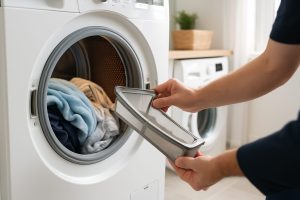
Look for signs such as standing water in the drum or a slow drain. Remove any visible debris from the pump or filter. If the issue persists, the pump may need to be replaced.
7. Control Board or Timer Malfunction
Modern washers rely on a control board to manage cycles. If the board fails, it can skip the spin cycle or shut down the machine altogether. Traditional washers may experience issues with mechanical timers instead.
Diagnosing a control board issue requires electrical testing and may not show obvious signs. If your washer behaves erratically or skips certain cycles, a faulty control board could be to blame.
Troubleshooting Steps for a Washer That Won’t Spin
Before calling a professional, there are several troubleshooting steps you can take to try and resolve the issue yourself:
- Check the Power Supply: Ensure the washer is properly plugged in and the circuit breaker hasn’t tripped.
- Redistribute the Load: As mentioned, balance the laundry evenly inside the drum.
- Inspect the Lid or Door Switch: Test if the machine recognizes when the door is closed.
- Examine the Drainage System: Clear the drain hose and pump of any clogs.
- Run a Spin Test Cycle: Many washers have a spin-only setting to help diagnose issues.
- Listen for Unusual Sounds: Clicking, humming, or grinding noises can point to motor or mechanical issues.
If you’ve tried these steps and your washing machine still won’t spin, it’s time to call a professional appliance repair service in Arlington, TX.
Washer Not Spinning: Top Load vs. Front Load
While the root causes may overlap, top load and front load washers have unique components and common failure points.
Top Load Washer Not Spinning:
- Frequently affected by unbalanced loads
- Prone to motor coupling issues
- Lid switch more likely to fail
Front Load Washer Not Spinning:
- More dependent on door lock mechanisms
- Often has electronic control board faults
- Clogged drain pumps are a frequent issue
Understanding the type of washer you own helps guide accurate diagnosis and repair.
When to Call a Professional Washer Repair Service
If basic troubleshooting hasn’t solved the problem or you suspect a more complex issue, it’s best to consult a professional. Continuing to use a malfunctioning washer can worsen the damage and lead to higher repair costs.
A professional technician will:
- Conduct a full diagnostic inspection
- Test internal components such as the motor, control board, and sensors
- Repair or replace defective parts with manufacturer-approved components
- Provide maintenance tips to prevent future issues
Look for a reputable appliance repair Arlington TX service with experience, transparent pricing, and a satisfaction guarantee. Your washer is a vital home appliance—don’t leave its repair to chance.
Why Choose Greg’s Grade A Appliance Repair in Arlington, TX?
At Greg’s Grade A Appliance Repair, we specialize in diagnosing and fixing washing machine spin cycle problems for all major brands and models. From motor issues and door locks to unbalanced loads and drainage problems, we’ve seen and fixed it all.
Our certified technicians arrive on time, carry the necessary parts, and deliver lasting repairs with friendly service. We understand how frustrating it is to deal with a washer not spinning, and we work quickly to get your laundry back on track.
Conclusion: Don’t Let a Washer Spin Issue Disrupt Your Routine
A washing machine not spinning is more than just a minor inconvenience—it’s a sign that something needs attention. From clogged pumps and worn belts to faulty motors and control boards, spin cycle issues vary in complexity. While some problems can be solved with basic washing machine troubleshooting, others demand the expertise of a trusted technician.
If your washer drum is not spinning, or your washer won’t spin clothes dry, don’t wait until the issue worsens. Let the professionals at Greg’s Grade A Appliance Repair in Arlington, TX take care of it promptly and affordably. Contact us today for fast, reliable washer repair service and get your laundry routine running smoothly again!